Showing posts with label HOME THEATER. Show all posts

Saturday, June 11, 2011

Home Theater Speaker Shopping Advice


Almost all home theater systems include the following speakers:
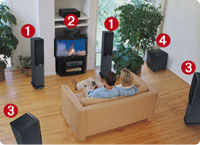
home theater speaker placements
  1. Front left and right speakers
  2. Center channel speaker
  3. Surround speakers
  4. Subwoofer
These speakers work together to create the surround sound experience of a movie theater in your living room. While there are many brands and models that do a great job reproducing sound, you will want to be sure that the various speakers in your home theater system work well together as a cohesive unit. Check out what each speaker's job is, and some of the things to consider before buying.

Before you start, consider voice-matching. Voice-matching is key to effective home theater sound. If your speakers do not produce a similar tonal quality and share the same harmonic characteristics, the sound will be disjointed when it travels from speaker to speaker. With voice-matched speakers, the sound moves effortlessly around you, creating a seamless surround effect. The best way to ensure voice-matched speakers is to choose speakers from the same "family" of speakers, by the same brand. If you'd like to add center and surround speakers to an existing pair of stereo speakers, and you don't think that series is in production anymore, call Crutchfield or the manufacturer to see whether speakers from a newer series would be tonally similar.

Finally, a note on placement: where you plan to position each speaker in your room might affect the size or type of speaker you choose. You can learn about the basics in our video on speaker placement, or find more detailed guidelines in our speaker placement article.

Front left and right speakers
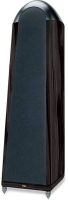
Floorstanding Speaker
Bookshelf Speaker
Micro Speaker

There's a wide range of speakers to fit
just about any room, including floor-standing
speakers (left), bookshelf speakers (center),
and satellite speakers (right).
In home theater, the front left and right speakers offer a wide soundstage that blends with the video to create a more realistic and exciting movie experience. In addition to reproducing the musical score, front speakers handle the bulk of the special effects, which move back and forth between the two speakers in sync with the images on the screen. Front speakers also broaden the soundstage by reproducing off-screen special effects. Finally, the front left and right speakers in your home theater system also act as the left and right stereo speakers for listening to music.

What to look for:
  • Speaker type. Floor-standing speakers, bookshelf speakers, and satellite speakers all work fine as front left and right speakers. Floor-standing tower speakershave the most impact and provide great low-frequency response, but they also take up more space. Bookshelf speakers don't reproduce as much bass, but they're more space-efficient and still sound great. Compact wall-mountable satellite speakers must be teamed with a subwoofer, but they're ideal if you want big sound from a small package. Bookshelf and satellite speakers can be placed on shelves or tables, and they can often be mounted on stands or walls.
  • Voice-matching. Make sure your front left and right speakers are voice-matched to the rest of your speakers, especially your center channel speaker.
  • Video-shielding. Tube TVs are sensitive to having speakers placed near them. Make sure your front left and right speakers are video-shielded so they won't adversely affect your TV.

Center channel speaker
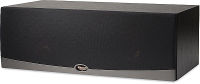
Center Speaker
The center channel speaker delivers
more than half of the soundtrack,
including almost all of the dialogue.
(Klipsch RC-62)
The center channel is the unsung hero of the home theater speaker system. When you watch a movie, the center channel delivers more than 50% of the soundtrack, including almost all of the dialogue. Since its purpose is to keep sound anchored to the on-screen action, a good center channel speaker is crucial for a well-balanced home theater system.

What to look for:
  • Placement. The center speaker typically sits on or just below your TV, so make sure your center channel is an appropriate size for the intended placement. If you have a wall-mounted flat-panel TV, and you won't have a stand on which to place your center channel speaker, you may want to consider a wall-mountable center channel speaker, or an in-wall speaker. It's very important that your center be located directly above or below your screen, since placing it somewhere off to the side can noticeably disrupt the surround sound experience.
  • Speaker size. Like the front speakers, center channel speakers are available in a variety of sizes. You should consider the other speakers in your system as well as the size of your television set when making a decision. Subwoofer/satellite systems usually use smaller center channel speakers, and these interact just fine with the smaller mains and surrounds. Tower speakers require a larger center channel model to maintain a seamless surround effect.
  • Voice-matching. When selecting a center channel speaker, it's vital that you settle on one that is voice-matched to your front left and right speakers. Most manufacturers offer center channel speakers that are designed to blend perfectly with their other products.
  • Video-shielding. Virtually every center channel speaker is shielded, but if you're planning to use a speaker that wasn't designed as a center channel in that spot, make sure it's video-shielded.

Surround speakers
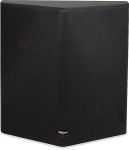
Surround Speaker
Surround speakers produce
exciting, enveloping directional
effects. (Klipsch RS-52)
Surround speakers produce atmospheric, ambient sounds -- such as rain drops, the rustling of leaves, or footsteps crunching on gravel. They also work with your other speakers to deliver spectacular directional effects, like a locomotive rushing by, or a bullet zinging past. They help put you smack dab in the center of the action.

Although a 5.1-channel surround system, with only one pair of surround speakers, is the most common setup, most newer home theater receivers can power more than a single pair of surround speakers -- and there are surround formats to match. Today, many people buy one or two additional speakers to use as "back surrounds" in a 6.1- or 7.1-channel system.

What to look for:
  • Speaker type. Ideally, your surround speakers should have the same performance capability as your front left and right speakers, but that's not always realistic when you consider room size and space. Most people use either bookshelf or satellite speakers (when the system also has a subwoofer) for their surrounds. Both bookshelf and satellite speakers may require stand placement or wall mounting.
  • Dipole/bipole capability. Some higher-end surround speakers offer a dipole/bipole switch (sometimes referred to as a "Solid/Diffuse" switch). These speakers feature two high-frequency drivers that either fire in phase (bipole) or out of phase (dipole). Dipole/bipole speakers take advantage of reflected sound to create a wide soundfield, and they provide greater speaker placement flexibility.
  • Placement. Correct surround speaker placement results in a very realistic three-dimensional soundfield; incorrect surround speaker placement can leave people asking, "Are our surrounds even on?" Check ourspeaker placement guide and consider where you'll put your surrounds and whether they'll need to be stand-mounted, wall-mounted, or even in-wall or in-ceiling models.
  • Voice-matching. Again, for the most realistic listening experience, it helps if your surround speakers are from the same "family" or series as your main and center channel speakers, and have similar tonal characteristics.

Powered subwoofer
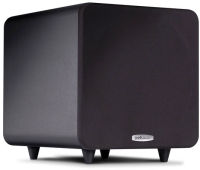
Subwoofer
A subwoofer is essential for deep,
rumbling lows. (Polk Audio PSW111)
If you are assembling a home theater, plan on including a powered subwoofer. Many Dolby Digital and DTS soundtracks provide a dedicated channel of deep bass (sometimes known as low frequency effects, or LFE). This bass is what makes the entire soundtrack feel larger, fuller, and more lifelike -- it gives special effects like thunder or explosions their window-rattling punch. A subwoofer is also a wonderful way to enrich music listening -- it can round out all types of music, from classical to jazz to rock to R&B. Since most speakers can't deliver that level of bass on their own, a subwoofer is needed to ensure that your home theater system delivers crucial low-frequency impact.

What to look for:
  • Power. If you have a large room (or if you just crave serious bass impact) then you should look for a sub with more watts in the built-in amplifier. Plus, as a general rule, the larger the driver, the deeper the bass -- so go for a sub with a big 10" or 12" woofer cone (or a multi-woofer sub) for extra bass response.
  • Placement. Low-frequency sound waves are omni-directional, so you have a great deal of flexibility when it comes to subwoofer placement. If you have a spot in your room picked out, consider the dimensions of the sub's cabinet to make sure it will fit. And remember that placing your sub near a wall, or, even better, in a corner, can increase bass impact noticeably.
  • Video-shielding. If you are planning to place your subwoofer anywhere near a tube TV, be certain to get a video-shielded sub.

Sunday, May 15, 2011

Demonstrating Your Home Theater System

Peter Tribeman, President and CEO of Atlantic Technology and Outlaw Audio
Part I: How to impress your family and make your neighbors jealous.
After dreaming for years, you finally acquired that home theater you've always wanted. Guided by a little help from your not-so-subtle hints, Santa delivered to you a 60-inch plasma television, a Blu-ray player, a high-definition cable box (complete with a built-in digital video recorder), a speaker system, a killer sub, and a new, powerful 7.1-channel receiver. Admittedly, you bought some of them yourself, but it's the thought that counts, right?
1007Hook.1.jpg
A proper speaker setup.
Best of all, you received the blessing of your spouse to take over the basement. OK, so you had to agree to relegate the drill press and the radial saw to the garage. However, in exchange for that painful move, you are now the newly self-appointed CEO (Chief Entertainment Officer) of this veritable fortress of picture and sound.
But now, how do you challenge that new cineplex that just opened at the mall? More importantly, how do you convince your spouse that it was a great investment? And finally, how do you make your next-door neighbor (the one with the coffin-sized subwoofer that blurts out nothing but bloated, one-note bass) green with envy?


Well, in the pages to follow, I'm going to help you develop and present an incredible demo for your home theater. And, in the end, you'll have the admiration of your family and friends, not to mention a healthy new respect from your neighbor in all things home theater. Be prepared to become the local A/V guru.
The secrets revealed here were gathered by several of us who have worked in the home theater industry for the last two decades. We have learned that there are many rules to follow and, of course, some to be broken. Collectively, we have put together hundreds of home theater setups and conducted well over 2,000 demonstrations. Not only have we discovered what works, we've also found what totally misses the mark.
A good demonstration should leave the viewers smiling, laughing, crying, in awe, or just plain breathless from the full experience. For just a brief period of time, the best demos will take your audience to a different place, a place where they are not thinking about the system. They are totally immersed in what they see and hear. It's only then that a good demonstration has done its job.
We have all seen and heard otherwise good home theater demonstrations fail simply because of plain old poor setup. If it's too loud (that's right, not a misprint) or has too much bass or too much surround, the entire experience can be disappointing. The only thing your audience will be thinking is, "When will this be over?" So here, for your viewing and listening pleasure, is a crash course in home theater acoustics.
1007Hook.2.jpg
Peter Tribeman in full demo action.
The Rules of the Setup: Dead Is Better Than Live
Have you ever spoken on the phone with friends and it seems as if they're talking to you from a small gym? Chances are, they're speaking from a beautiful living room with hardwood floors, high ceilings, and large picture windows. While it looks great, it's a haven for reflected sounds. When you are visiting them in person, you find it difficult to understand a conversation in their living room unless you are only a few feet away from the person speaking. The sonic reflections from the walls, ceiling, floors, and windows mix with the voices and hamper intelligibility.
But if your friends decorated their living room with some draperies and rugs, all of a sudden, you would easily understand the conversation. The material would absorb some sound reflections, and you would be able to easily understand the conversation.
In the same way, a good home theater incorporates different sound-absorbing materials that kill some of the spurious reflections. It doesn't mean that you have to erect an anechoic chamber; too much absorption isn't optimal, either. But absorbing some of those nasty reflections will work miracles for intelligibility, especially in the center channel. Believe it or not, the key to having a really good home theater is a high degree of center-channel clarity. Just think of how many movies you've watched when you could not understand important parts of the dialogue. That alone can ruin an otherwise great movie.
How do you know if you need to damp out some of the reflections in your room? The answer is easy. Just clap your hands once and listen. If you can hear that sound gradually die away, or hear a quickly bunched set of little echoes, you have a problem. Add rugs, bookshelves (with books), small wall hangings, or tapestries until most of the reflections disappear. Find someone to stand where the center channel will be located and ask him or her to speak to you in a normal conversational voice. If you can understand every word, you are in pretty good shape.
1007Hook.3.jpg
Acoustic panels can be a lifesaver.
Getting Your Speaker Setup in the Right Shape
Left/Right Speakers: Sometimes Wide-Open Spaces Are Bad
Your front speakers should be wide enough apart to deliver a convincing soundstage for both music and movies. However, they should not be spread too far apart, or else an acoustic hole will develop in the middle when you play two-channel music. The best way to test this is to listen to vocals and music separately. The vocals should be perfectly centered between the left and right speakers. However, when listening to music, if the instruments don't create a convincing soundstage in front of you, that is a clue that you have them set too far apart. Move both speakers in until the stage melds seamlessly. If possible, and recommended by the speaker's manufacturer, you should toe in the left and right speakers a little toward the main listening position.

When it comes to sound, all really good movie theaters have something in common. You can understand the dialogue. It's the properly set-up center channel that allows you to understand the film. The center-channel speaker is the heart of your home theater universe. By some estimates, as much as 85 percent of the movie soundtrack resonates from that speaker.

You can place the center channel above or below the screen (ideally, so the tweeter is about the same height as in the left and right speakers). However, if that's not feasible, it is crucial that you tilt or aim the center-channel speaker toward the prime listening position. Little is worse than having the high frequencies fire at your ankles or over your head. It destroys the timbre and affects intelligibility. Some center-channel designs provide tilting mechanisms to properly aim the speaker. If your speaker lacks this provision, look around for one of your old VCR cassettes. With a little Scotch tape and ingenuity, they can serve as an improvised tilting platform. (Caveat: Make sure it's a videotape that you don't care about, because the magnets in the speaker could mangle what's on the tape. Also, if you have small children, large dogs, or live in earthquake country, be careful to secure the speaker properly.)

Subwoofers: Feeling the Lows
This is also known as the Goldilocks approach: not too much or too little woof. Adjusting the sub just right is a topic unto itself. That being said, here are a few things you can do to get reasonably close to just right in short order.
1007Hook.4.jpg
Audyssey MultEQ Setup System
Don't Double-Cross Yourself
All A/V receivers have subwoofer outputs that allow you to set the crossover for the woofer in the setup menu. This setting is very accurate. Once you have done that, try to avoid setting the crossover on the subwoofer itself to anything but Bypass. (The Bypass or LFE setting disables the crossover in the subwoofer so that only the receiver is filtering what goes to the sub.) If your subwoofer lacks a bypass switch or LFE input, then set the crossover control as high as it will go. We recommend this because almost all subwoofer crossover adjustments are coarse approximations, and, when you use both the filter in the receiver and on the subwoofer, the two settings battle each other, resulting in grossly uneven bass response.

The Old Subwoofer Switcharoo
In general, select a corner or a side wall and experiment with test tones and program material to ensure adequate low-frequency extension without one-note boom. Here is a tried-and-true shortcut for finding great placement for your subwoofer. Warning: Make sure that your significant other is either enthusiastic about the project or not present for this experiment. To start, place the subwoofer in your favorite chair or listening position. Now go to the wall, and while playing something with good bass, walk (or crawl) along the wall until the bass sounds really good. Lastly, swap positions with the subwoofer. Remove it from the chair, place it where you were standing, go back to the chair, and sit down. The laws of physics dictate that the woofer will now sound great from your listening position.

Getting Surrounded
When you visit a good theater, you'll notice that the surround speakers are placed on both sides of the venue. There might be a few speakers behind you, but the main surround arrays are out to your left and right. In your listening room, if at all possible, the surround speakers should also be to your left and right, preferably mounted slightly above your head (when seated). We prefer dipole speaker designs because of their diffuse soundfield and recommend this placement because it will reproduce the most convincing surround field. Many people place their surround speakers in the back of the room. Unless it is absolutely necessary, we do not recommend this placement because it could produce an acoustic hole out to your sides.

Adjusting Your System: Avoiding Messing Up All Your Hard Work
When you experience bad sound in a theater (or a home theater, for that matter), the mistakes are usually ones of excess—too much of something (or everything). An excessively loud subwoofer represents one common mistake. Everything seems punctuated with awhump—even dialogue. For some reason, theaters and/or consumers turn their subs up way too much. Why? Because they can. Another common mistake is enabling too much surround. This is a common mistake because many listeners believe that they have to hear the surround channels all the time—and at the same volume as the left, center, and right channels. Surround information should always be in the background (unless there is specific action on the screen that calls for more ambience or directional cues). You might hear rain in the jungle, traffic in the street, or wind in the desert, but nothing should distract you from the front three channels. Surrounds that are too loud will, among other things, swamp the center channel and make all of the dialogue difficult, if not impossible, to understand.
1007Hook.5.jpg
RadioShack Sound-Level Meter
Adjusting Your System
The Quick Way to Adjust Your System
Believe it or not, your ears are better adjustment tools than you ever imagined. Turn on the test tone in your receiver, and, as it circles the room, jumping from channel to channel, use the remote control to adjust the level until everything sounds about the same. Is this scientifically accurate? Absolutely not. However, it works as a reasonable estimate.
The Better Way to Adjust Your System
Buy the RadioShack analog sound-level meter. This product has been around for years, and every time RadioShack tries to replace it with their digital meter, we all kick and scream until they put it back into production. It has been discontinued at least six times in the last ten years, and they always bring it back.
Set the meter to Slow/C-Weighted and, from your seat, set all the channels until they read the same. Try pointing the business end of the meter at the ceiling and moving it back and forth slowly in front of you to obtain a spatially averaged reading. It is uncannily accurate, except in the bass. However, if you search the Internet, you will find easy-to-use charts that compensate for the bass error.
Maximizing Your Woofer Without Living in the Boom-Boom Room
We have already talked about too much woofer level. So how can you maximize low frequencies without becoming bass-centric? Here is a rule breaker. Be certain your system is otherwise configured correctly, then play your sys-
tem at normal level with a male voice (Harrison Ford's is ideal). Keep turning up the sub until you can just perceive the lower registers of his voice coming through the sub (where it does not belong). Now slowly back off the volume until his voice disappears from the sub. The sub level is now most likely at its highest usable setting, and everything in the soundtrack will be close to optimal with no perceived lower-midrange chestiness leaking from the subwoofer. While this is a handy trick with systems with a crossover frequency of roughly 100 hertz and below, it may not be as effective with HTIBs and other systems with truly tiny satellite speakers and higher crossover points.
Once you have calibrated the system, you are now ready to break the rules of your setup if you so choose. Here's an effect we enjoy, but you should experiment for yourself and see if you reach the same conclusion. If not, just reset your system to where you initially calibrated it. Our experimenting has convinced us that you can develop a great sense of acoustic space by adjusting two parameters. Turn down the calibrated center channel by as much as 2 decibels and turn up the surrounds by an equal amount. Bonus adjustment: If the center channel has a treble adjustment, or if the receiver has a dedicated tone control for the center channel only, turn it down very slightly. All of these rule-breaking adjustments tend to open up the room in a very subtle, though meaningful way. Your living room will sound a bit more expansive, yet the dialogue's intelligibility will be minimally affected.